Best Calm-Water Family Beaches in the Dominican Republic (2026)
The shallow, sheltered beaches that work for toddlers and non-swimmers in every region, and the famous ones to skip with small kids
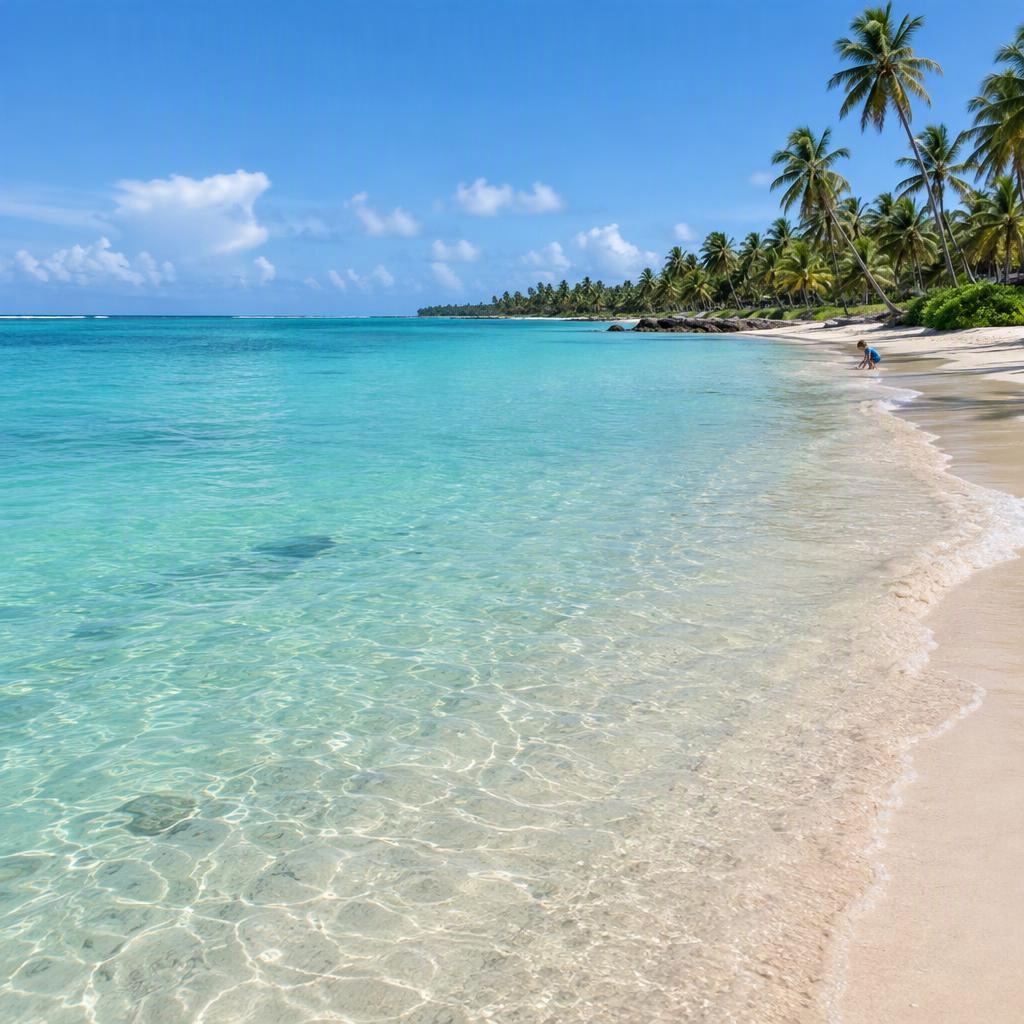
The good news for parents is that the Dominican Republic has a lot of beaches where small children can splash safely. The catch is that some of the most photographed ones, like Macao, Playa Grande and Playa El Valle, face the open Atlantic with real surf and rip currents. The difference usually comes down to one thing: whether a reef, a bay or a breakwater stands between the beach and the open ocean.
This guide picks the calmest, shallowest beaches in every region, then lists the popular ones to skip with toddlers and weak swimmers.
The short version: For the calmest water in the country, go to Minitas Beach, Boca Chica, Bayahíbe Beach, Juanillo Beach, Playa La Ensenada or Cayo Levantado. On the north coast, stick to Sosúa Beach and Playa Caletón. Go in the morning, assume there is no lifeguard, and bring water shoes.
What makes a beach safe for small kids
Protection from the open sea. An offshore reef, as along Bávaro and Boca Chica, or an enclosed bay, as at Sosúa, Cayo Levantado and La Ensenada, takes the energy out of the waves. Beaches that face the open Atlantic with nothing in front of them get surf and currents, especially in winter.
A gentle slope. The best family beaches stay shallow far from shore. Some calm beaches still shelve quickly, like Playa El Quemaito near Barahona, which is fine for adults but less relaxing with a toddler.
A soft bottom. Sand is easiest. Seagrass is harmless. Coral rock, sea urchins and sharp shells, which you find at Bayahíbe’s edges, Guayacanes and Buen Hombre, call for water shoes.
Lifeguards, or the lack of them. Most public beaches in the Dominican Republic have none. Resort beaches use flags, and on beaches like Playa Dorada the hotels put out yellow or red flags when the swell is up. Respect them. Our safety tips cover the rest.
Punta Cana & Bávaro
Punta Cana is the easiest region in the country for a calm family beach, because a fringing reef runs along most of the coast.
- Juanillo Beach: the top pick. A sheltered bay in Cap Cana with exceptionally clear water, a forgiving entry and gradual depth. It also collects much less sargassum than the rest of the coast, so it works in summer.
- Cabeza de Toro Beach: calm, reef-protected and further sheltered by a small peninsula, with a gentle entry and fewer people than central Bávaro.
- Bávaro Beach and Arena Gorda: reef-protected, gradual entry, no significant currents in the usual resort zones. Most family resorts sit here. The caveat is sargassum from roughly May to September.
- Playa Blanca: calm turquoise water with an offshore mesh barrier to keep sargassum out of the swimming area. Day passes were around $50 per person in 2026, credited toward food and drinks.
Uvero Alto is calm most days too, but the reef is less continuous and windy days bring chop. Skip Macao with young children. For resorts and kids’ clubs, see Punta Cana with kids.
La Romana & Bayahíbe
The Caribbean coast of La Romana and Bayahíbe has some of the flattest water in the country.
- Minitas Beach: inside Casa de Campo, protected by rock jetties with a shallow sandy bottom and almost no waves. It is ideal for toddlers, but it is a private beach club for resort guests.
- Bayahíbe Beach: on most days there is barely a ripple, and you can see the bottom well past waist depth. Easy for kids and nervous swimmers. Wear water shoes near the coral rock at the edges, and watch for boats in the morning.
- Playa Dominicus: calm, shallow and clear, with long stretches of resort beach. Some sections are roped off as boat lanes. Family resorts here include Iberostar Hacienda Dominicus.
- Saona Natural Pool: a sandbar in open water where you stand knee to waist deep over soft sand. Good for non-swimmers who stay near an adult. It drops off at the edges and boats come and go.
- Isla Catalina: calm, clear water with a gently sloping beach, and a shorter, easier day than Isla Saona, which involves long speedboat legs that are hard on very young children.
Santo Domingo, Boca Chica & Juan Dolio
- Boca Chica Beach: a reef turns the bay into a giant natural pool, mostly no deeper than about four feet (1.2 meters) for a long way out, with no surf and little current. Kids can splash and weak swimmers can wade. Weekends and holidays are very crowded, and sargassum piled up in bad summers, including September 2025. Older kids can wade out to the mangrove cay of La Matica at low tide with an adult.
- Juan Dolio Beach: mostly calm and reef-sheltered with fewer crowds. Some stretches have rock near the waterline, so pick a sandy section. Coral Costa Caribe and Emotions by Hodelpa Juan Dolio are family all-inclusives.
- Playa Guayacanes: calm and shallow, but rocky underfoot in places.
- Playa Palenque: west of the city, usually calm with low waves and more suitable for children than Playa Najayo next door.
See beaches near Santo Domingo for drive times.
Samaná Peninsula
Most of the Samaná coast faces the Atlantic, so the family beaches are the sheltered ones.
- Cayo Levantado: an island inside Samaná Bay, protected from the Atlantic, calm and shallow near shore. One of the best family beaches on the peninsula, though the public beach gets crowded when tour boats arrive, especially in whale season. See the Cayo Levantado day trip.
- La Playita: a calm, gently sloping bay beach in Las Galeras, good for kids splashing at the edge.
- Playa Las Ballenas: the easy town beach in Las Terrenas, with a reef offshore that usually keeps the shore break gentle, plus shade and food nearby. Look at the water first on swell days.
- Playa Rincón: mostly calm at the ends, with a moderate shore break in the open middle and no lifeguards. Fine for a family day if you keep kids close and stay near the ends.
Puerto Plata, Sosúa & Cabarete
The Puerto Plata coast is open Atlantic, so choose carefully.
- Sosúa Beach: a deep horseshoe bay, calm and sheltered, the most reliable family swim on this coast. Sundays bring big Dominican family crowds.
- Playa Caletón: a small cove near Río San Juan protected by rocky points, with a gentle entry and tide pools to explore.
- Cofresí Beach: a fairly sheltered bay, usually calm, with waves possible during winter north swells. It pairs well with Ocean World next door.
- Playa Dorada: calm in summer, but from roughly November to March north swells bring waves and rip currents. Families staying here should follow the hotel flags and swim in summer or on flat mornings.
Montecristi & Punta Rucia
- Playa La Ensenada: one of the best family beaches in the north. A protected bay with calm, very clear, shallow water where small kids can play at the edge and adults can wade to waist depth. Quiet on weekdays, lively on weekends.
- Punta Rucia Beach: a generally calm, protected bay next door, with moored boats in places.
- Cayo Arena: shallow, clear and calm around the sandbar, but with currents at the edges. Better for families with confident swimmers than toddlers.
Miches & Costa Esmeralda
Playa Esmeralda in Miches is usually calm to moderate inside Samaná Bay, but it is open water with no reef, and conditions change by day and section. There are no lifeguards on public stretches, so families do best swimming in front of resorts like Club Med Miches Playa Esmeralda in the morning. Skip Playa Limón for swimming.
Barahona & Pedernales
On the south-west coast, the sea is often rough, but the rivers make up for it.
- Balneario San Rafael: stepped river pools beside Playa San Rafael, cold and calm, where families float and kids jump in. The sea a few meters away has strong waves and undertow, so keep children in the pools.
- Playa Los Patos: a short, cold, crystal-clear river lagoon, shallow at the edges for kids. The sea side has big waves.
- Bahía de las Águilas: usually calm, clear and shallow with a gentle sandy entry, but there is no shade, food or lifeguard, and it is a long day. Best with older kids.
- Playa Pedernales: the usually calm local beach in town.
Popular beaches to avoid with small kids
These beaches are worth seeing, just not for toddlers or weak swimmers in the water:
| Beach | Why |
|---|---|
| Macao Beach | Open Atlantic, the strongest surf and currents near Punta Cana, rips in winter swell |
| Playa Grande and Playa Preciosa | Strong surf and rip currents for much of the year; people get caught in rips here |
| Encuentro Beach | Reef surf break with strong currents and shallow reef at low tide |
| Kite Beach and Cabarete Beach in the afternoon | Wind, chop and kite lines; currents near the reef gaps |
| Playa El Valle and Playa Morón | Exposed surf, steep shelf, rip currents |
| Playa Cosón in winter, and the surf end of Playa Bonita | Shore break and rips when the swell is up |
| Playa Frontón | Gets rough and deep close to shore in northern swell, no facilities |
| Playa Limón | Atlantic swell, stronger currents, river mouth |
| Playa Caribe and Playa Najayo | Exposed to south swell; Caribe is a surf beach |
| Playa Paraíso | Steep entry, often rough with strong current |
| Güibia and the city beaches | Not recommended for swimming because of contamination |
If your older kids want to learn to surf or kite, our surf and kitesurf guide covers where lessons are safest.
If you get caught in a current
Rip currents pull straight out from the beach. Do not swim against one. Swim parallel to the shore until you are out of the pull, then come back in at an angle, or float and wave for help. Keep children within arm’s reach on any beach with breaking waves, and do not drink before going in.
Timing and practical tips
- Go in the morning. Wind builds through the day on most coasts, and calm water turns choppy after lunch.
- Know the season. On the north coast, May to August is usually calmest; winter north swells run from about November to March. The Caribbean side is calm most of the year. See best time to visit.
- Watch for sargassum on east- and south-facing beaches in summer, especially Bávaro, Uvero Alto and Boca Chica. Juanillo, Playa Blanca and sheltered bays get less. The sargassum guide explains the pattern.
- Avoid weekends at local favorites like Boca Chica, Bayahíbe, Sosúa and La Ensenada if you want space; Sundays and holidays, including Semana Santa (Easter week), are busy and loud.
- Pack water shoes, shade and cash. Many family beaches outside resorts have little shade and only simple food shacks. Our packing list has the rest.
- Pick a boat trip with care. Short trips to Cayo Levantado or Catalina are easier on small children than full-day Saona or Cayo Arena tours. For reef snorkeling with older kids, see the best snorkeling beaches.
Frequently Asked Questions
What is the calmest beach in the Dominican Republic for kids?
Minitas Beach at Casa de Campo is the closest thing to a saltwater pool, protected by jetties with almost no waves. Among public beaches, Boca Chica, Bayahíbe Beach, Juanillo Beach in Cap Cana, Playa La Ensenada near Punta Rucia and Playa Caletón near Río San Juan are all shallow and sheltered on most days.
Are Dominican beaches safe for toddlers?
Many are, if you pick the right ones. Reef-protected and bay-sheltered beaches on the Caribbean side and in a few north-coast coves have gentle slopes and little current. Open Atlantic beaches such as Macao, Playa Grande and Playa El Valle have surf and rip currents. Public beaches rarely have lifeguards, so an adult should always be in the water with small children.
Do beaches in the Dominican Republic have lifeguards?
Mostly no. Resort beaches put out flags and some have staff watching the water, but public stretches, including famous ones like Playa Rincón and Bahía de las Águilas, usually have no lifeguards at all. Plan as if nobody is watching except you.
Which Punta Cana beach is best for small children?
Juanillo Beach in Cap Cana has a forgiving entry, gradual depth and less sargassum than most of the coast. Cabeza de Toro is calm and bay-sheltered, and central Bávaro and Arena Gorda are reef-protected with gentle entry. Avoid Macao Beach with young kids.
Is the Saona natural pool safe for non-swimmers?
It is one of the best spots in the country for them: a sandbar where the water is knee to waist deep over soft sand. Stay near an adult, because it drops off at the edges and boats move around you. Rough seas occasionally cancel the stop.
When is the sea calmest in the Dominican Republic?
On the north coast, May to August is usually calmest, while north swells from about November to March bring waves to beaches like Playa Dorada and Cosón. On the Caribbean side the sea is calm most of the year. Everywhere, mornings are calmer than windy afternoons.