Best Snorkeling Beaches in the Dominican Republic (2026): Reefs, Islands and Shore Spots
Where the reefs are actually worth a mask, what you will see, when the water is clearest, and when to book a boat instead of swimming from the sand
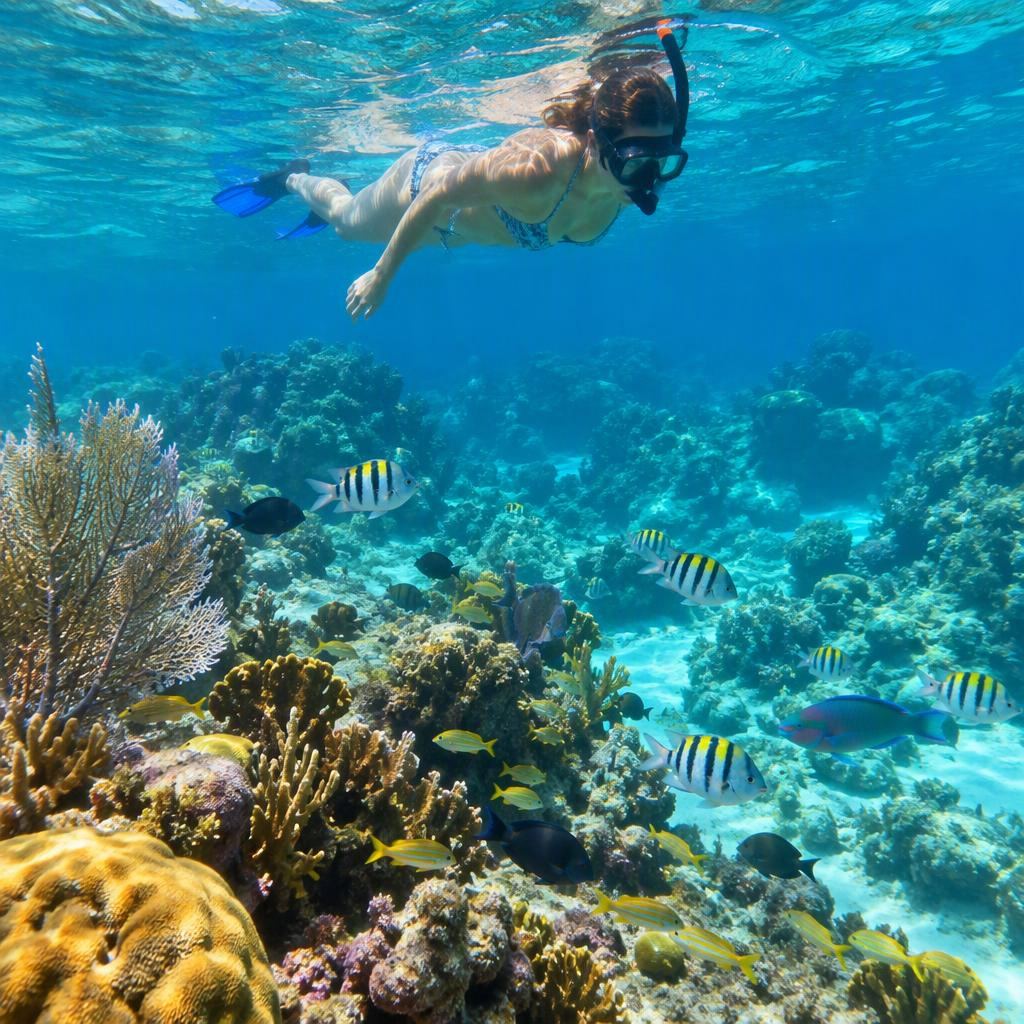
The Dominican Republic is better known for long white beaches than for reefs, but there is good snorkeling here if you know which coast to pick. The calm, clear Caribbean water of La Romana and Bayahíbe has the most reliable reefs in the country. Montecristi and Punta Rucia in the north-west have a coral-ringed sandbar and a chain of uninhabited cays. The Puerto Plata coast has a couple of sheltered bays where you can swim off the sand and find fish within a few minutes. And Punta Cana, where most visitors stay, has a long fringing reef offshore that you reach by boat.
This guide ranks the spots by region, explains what you will actually see, and helps you decide between a tour and a mask from the beach.
The short version: For the best snorkeling, book a trip to Isla Catalina from Bayahíbe. For snorkeling straight from the sand, go to Sosúa Beach or Bayahíbe Beach. For the most photogenic day, take a boat to Cayo Arena. In Punta Cana, skip the beach and book a reef snorkel tour. Go on a calm morning between December and April for the clearest water.
How snorkeling works in the DR
Three things decide whether a beach is worth a mask.
Reef or no reef. Many of the country’s famous beaches are long sandy bays with seagrass or bare sand underfoot. You need coral, rock or a reef edge to find fish. A beach can be calm and lovely without being a snorkeling beach at all, which is the case at Boca Chica, Minitas Beach and most of Playa Dorada.
Which sea. The Caribbean coast in the south and south-east is calmer and usually clearer. The Atlantic coast in the north gets winter swell, which stirs up the water and can make reefs near shore unsafe. The north coast works best in sheltered bays and on flat days.
Rivers and wind. River mouths cloud the water after rain, and trade winds chop the surface by afternoon in many places. That is why almost every good snorkel day here starts early.
1. Isla Catalina and Isla Catalinita (La Romana & Bayahíbe)
If you only snorkel once in the Dominican Republic, make it here. Isla Catalina is a small protected island off La Romana, and it is known far more for what is under the water than for its beach. Most trips make two stops. The first is “The Wall” (La Pared), where the reef drops away into deep blue water and you float over the edge watching fish move along the coral face. The second is a shallower reef garden nicknamed “The Aquarium”, which suits beginners. Visibility is often excellent and the water is calm enough for first-timers wearing a vest.
A standard group snorkel tour from Bayahíbe costs around $80 per person in 2026 with lunch and drinks. Ask whether both snorkel stops, lunch, drinks and the park fee are included. Our Catalina snorkel trip guide compares the options. Cruise ships calling at La Romana use the island too, so the beach is busier on ship days.
Further east, Isla Catalinita is a tiny islet near the tip of the national park. Its reefs see fewer boats than the sites near Bayahíbe and often have good visibility, with soft corals, reef fish and sometimes rays and turtles. It is open sea with possible currents, so snorkel where the guide tells you and wear a vest unless you are a strong swimmer. It is usually added to premium Saona day trips.
2. Bayahíbe and Dominicus, from shore (La Romana & Bayahíbe)
Bayahíbe Beach is one of the few places in the country where you can walk in from the sand and snorkel over patches of coral and seagrass. On most days there is barely a ripple and you can see the bottom well past waist depth. Parts of the shoreline are low coral rock, so wear water shoes. Go mid-morning on a weekday, after the tour boats have left and before the afternoon crowd.
A few minutes south, Playa Dominicus has decent snorkeling over reef patches near shore, and several dive centers work from the hotels. Some sections are roped off as boat lanes, so check where you can swim.
Bayahíbe is also the scuba capital of the south-east, and some of its underwater “living museums” are shallow enough for snorkelers. On Guaraguao reef, cannons and muskets from colonial-era ships lie in about 5 meters of water. Ask a dive center about a snorkel visit, and see our Bayahíbe diving guide if you want to go deeper, including the St. George wreck.
3. Cayo Arena, La Ensenada and the Siete Hermanos (Montecristi)
Cayo Arena, sold to tourists as Cayo Paraíso, is a sliver of white sand in the middle of the sea, ringed by shallow turquoise water and coral. A short swim from the sand takes you over reef with plenty of colorful fish, and snorkel gear comes with most tours. The edges have currents, and the coral is fragile, so stay off it and never stand on it.
Most visitors come on a group tour from the Puerto Plata area, which runs about 8 to 11 hours door to door and was listed at around $65 to $100 per person in 2026, usually with lunch at La Ensenada and a ride through the mangroves. If you stay in Punta Rucia, the boat ride from Punta Rucia Beach takes 20 to 30 minutes, and hiring a fishing boat early gets you to the sandbar before 10 a.m., ahead of the crowds. Our Cayo Arena boat trip page has the details.
Next door, Playa La Ensenada has calm, very clear, shallow water and patches of reef close enough to snorkel without a boat, which makes it a good warm-up for kids before the sandbar.
For something wilder, the Cayos Siete Hermanos are seven uninhabited cays of coral sand off the north-west tip of the country, protected as a wildlife refuge. There are no huts or vendors, just clear, shallow reef and sand flats. The Ministry of Tourism notes that the dive sites around the cays are only about 3 meters deep and can be used on windy days when other Montecristi sites cannot. Arrange a boat with fishermen in Montecristi, ideally the day before, and bring everything with you. See the Siete Hermanos boat trip page. Some El Morro boat tours also stop for a snorkel near Isla Cabra, a small cay with coral nearby.
4. Sosúa, Playa Alicia and Playa Caletón (Puerto Plata)
The north coast is mostly open Atlantic, which is why Sosúa Beach stands out. Its deep horseshoe bay is calm and clear enough on a normal day to snorkel straight off the sand, with reefs running along both edges. Dive shops in El Batey also run boat trips to sites a few minutes offshore. The water tends to be clearest from December to April. Arrive before 9 a.m. to have the reef before the boat traffic and the vendors. Stay in Sosúa to walk to it.
Around the corner, Playa Alicia is quieter, with easy snorkeling around the rocks at either end on calm mornings and small reef fish close to shore. It is more exposed to winter swell than the main bay.
East of Cabarete, Playa Caletón is a small cove near Río San Juan protected by rocky points. The edges have tide pools and enough reef to make a mask worthwhile. Bring your own, or rent one in town for a few dollars, and wear shoes with grip on the wet rocks.
5. Playa Frontón and Playa Madama (Samaná)
On the Samaná Peninsula, the snorkeling is around Las Galeras. The reef just off Playa Frontón is one of the better spots in the area when the sea is calm, with coral heads and reef fish under towering cliffs. It is a confident-swimmer beach: when a northern swell runs, the water gets rough and deep close to shore. Ask your boat captain how it looks before you commit.
Playa Madama is a small cove nearby, usually more sheltered, and good for a swim and a look around the rocks with a mask on calm days. Neither beach has any facilities. The easy way to see both is a Las Galeras beach boat trip, which often adds Playa Rincón. In Las Terrenas, strong swimmers sometimes snorkel out toward the islets off Playa Las Ballenas, but it is farther than it looks and boats pass through, so only do it in flat water, with a buddy and a bright swim buoy.
6. Punta Cana: the reef by boat, a few rocks from shore
Punta Cana has a continuous fringing reef offshore, but it sits too far out to reach from most beaches. The dedicated snorkel tours, about 3 hours on small boats from around $50 per person, visit two or three sites with parrotfish, angelfish, surgeonfish, sergeant majors, brain coral and sea fans, and the occasional ray, turtle or nurse shark. Visibility is typically 50 to 80 feet in normal conditions. The catamaran cruise, from around $65, adds a single reef stop, a natural pool, an open bar and lunch. Choose the dedicated tour if the fish are the point.
From shore, your options are the rocky edges of Juanillo Beach in Cap Cana, the points at Cabeza de Toro where the sand turns back to coral, and the rocks at either end of Playa Blanca. They are fine for half an hour with a mask, not a reason to plan a day. Snorkeling stops at Saona and Catalina are bookable from Punta Cana too, with longer transfers.
7. The south-west: Bahía de las Águilas and El Quemaito
Bahía de las Águilas, inside Parque Nacional Jaragua in Barahona and Pedernales, is about 8 km of empty sand on clear, shallow, usually calm water. The best snorkeling is at the rocky points at either end, with fish around the cliffs. You reach it by boat or rough track from La Cueva, about 25 to 30 minutes from Pedernales. Reef-safe sunscreen is required in the park, fishing is prohibited, and there is no shade or food, so bring your own snorkel gear and supplies. Our boat trip page has prices and logistics, and some boats stop at a snorkel spot on the way.
Closer to Barahona, Playa El Quemaito has an offshore reef, and on settled mornings you can snorkel along the edges in clear water. It drops off quickly and gets waves on swell days. The Barahona and Pedernales road trip fits both into one route.
8. Near Santo Domingo
The Santo Domingo coast east of the capital is calm but not a reef-at-your-feet destination. Playa Guayacanes has enough reef close in to make snorkeling worthwhile on clear days, and it comes with good fried fish. West of the city, Playa Palenque has some marine life near the reefs, but visibility depends on river runoff. At Boca Chica, wading out to La Matica is about small fish, seagrass and the odd starfish rather than coral. Certified divers do much better at the La Caleta underwater park, where the coral-covered Hickory wreck sits at about 18 meters. See beaches near Santo Domingo for the full picture.
Where not to bother with a mask
These are good beaches, just not for snorkeling:
- Boca Chica Beach: a shallow lagoon of sand and seagrass.
- Minitas Beach: a calm, jetty-protected cove with a sandy bottom.
- La Playita in Las Galeras: sand and seagrass rather than reef.
- Miches and Playa Esmeralda: no reef, and Carlyle Cove clouds up after rain from the rivers.
- Playa Dorada, Cofresí and Long Beach: limited or modest snorkeling on the open Atlantic.
- Playa Juan de Bolaños: shallow and often cloudy; use it to find a boat to the cays.
When to go
Months. December to April is the most reliable period on most coasts, with drier weather and clearer water. On the north coast, winter can also bring north swells, so a sheltered bay like Sosúa is your best bet then. Late spring and early autumn often bring flatter seas around Las Galeras. Summer is warm and often calm on the Caribbean side, but sargassum can drift onto east- and south-facing shores, especially in Punta Cana and around Boca Chica. Our sargassum guide has the seasonal pattern, and best time to visit covers the weather.
Time of day. Mornings, almost everywhere. The trade winds usually build from late morning, chopping the surface and stirring up sand, and tour boats crowd the best-known sites by midday.
Water temperature. Around 78 to 82°F (26 to 28°C) year-round, so most people snorkel without a wetsuit. A rash guard helps on long boat days.
Tours or from shore?
| Book a tour | Snorkel from shore | |
|---|---|---|
| Best spots | Isla Catalina, Isla Catalinita, Cayo Arena, Siete Hermanos, Punta Cana reef | Sosúa Beach, Bayahíbe Beach, Playa Caletón, Playa La Ensenada, Playa Alicia |
| Quality | Better reefs, clearer water, deeper edges | Patchier coral, but no schedule and no crowds early |
| Cost in 2026 | Around $50 to $100 per person for group trips | Free, plus a few dollars for mask rental |
| Gear | Included, usually with vests | Bring your own for the best fit |
| Good for | Beginners who want a guide, families with older kids | Confident swimmers, early risers, repeat sessions |
A sensible plan for most trips is one boat day to a proper reef and a few early swims from the nearest sheltered beach.
Gear, safety and reef rules
- Wear a vest if you are not a strong swimmer, especially at The Wall on Catalina and at Catalinita, which are open water.
- Water shoes help at Bayahíbe, Caletón and any beach with coral rock, and protect against sea urchins.
- Reef-safe sunscreen or a rash guard. It is required in Parque Nacional Jaragua and expected in the other national parks.
- Do not touch or stand on coral, and leave starfish in the water. Lifting them out harms them.
- Stay visible. Boats use the bays at Sosúa, Bayahíbe, Las Ballenas and Boca Chica. A bright buoy is cheap insurance.
- There are almost no lifeguards on public beaches in the DR. Snorkel with a buddy and check the water before you go in.
If you are traveling with small children and want calm water more than reefs, our guide to calm-water family beaches is the better starting point. For region-level planning, see the La Romana and Bayahíbe travel guide, the Montecristi and Punta Rucia guide and the Puerto Plata travel guide.
Frequently Asked Questions
Where is the best snorkeling in the Dominican Republic?
Isla Catalina off La Romana is the most reliable, with a reef wall and a shallow reef garden on calm, clear water. Close behind are Cayo Arena near Punta Rucia, the reefs around Bayahíbe and Isla Catalinita, and Sosúa Beach on the north coast, which is the best place to snorkel straight from the sand.
Can you snorkel from the beach in Punta Cana?
Only in a limited way. The rocky edges of Juanillo Beach, the points at Cabeza de Toro and the rocks at Playa Blanca have fish and reasonable visibility. The main reef sits offshore, so the better snorkeling is on a catamaran or a dedicated snorkel tour, from around $50 to $65 per person in 2026.
When is the water clearest for snorkeling in the DR?
December to April is the most reliable stretch on most coasts, and calm mornings are best everywhere. Visibility drops after heavy rain near river mouths, on windy afternoons and when a north swell hits the Atlantic coast. Summer can also bring sargassum to east- and south-facing beaches.
How much does a Catalina Island snorkel trip cost?
A standard group snorkel tour from Bayahíbe costs around $80 per person in 2026, usually with transport, gear, drinks and lunch. Private boats cost more. Ask whether both snorkel stops, The Wall and The Aquarium, are included.
Is Cayo Arena worth the trip?
Yes, if you are on the north coast and happy with a long day. From the Puerto Plata area group tours take about 8 to 11 hours door to door and run around $65 to $100 per person in 2026. Staying in Punta Rucia cuts the boat ride to 20 to 30 minutes and lets you reach the sandbar before the big groups.
Do I need my own snorkel gear?
Not for tours, which include masks, snorkels and usually vests. For shore snorkeling at places like Sosúa, Bayahíbe, Playa Caletón or Las Galeras, bringing your own mask gives a better fit and means you can get in the water early, before rental stands open.
What are the rules for snorkeling in DR national parks?
Use reef-safe sunscreen (it is required in Parque Nacional Jaragua, home to Bahía de las Águilas), do not stand on or touch coral, do not lift starfish out of the water, do not fish or take shells, and carry your trash out.