Getting Around the Dominican Republic (2026): Uber, Taxis, Buses, Drivers and Rentals
Every transport option compared, with prices, drive times between beach regions, and what works in Punta Cana, Samaná, the north coast and the south-west
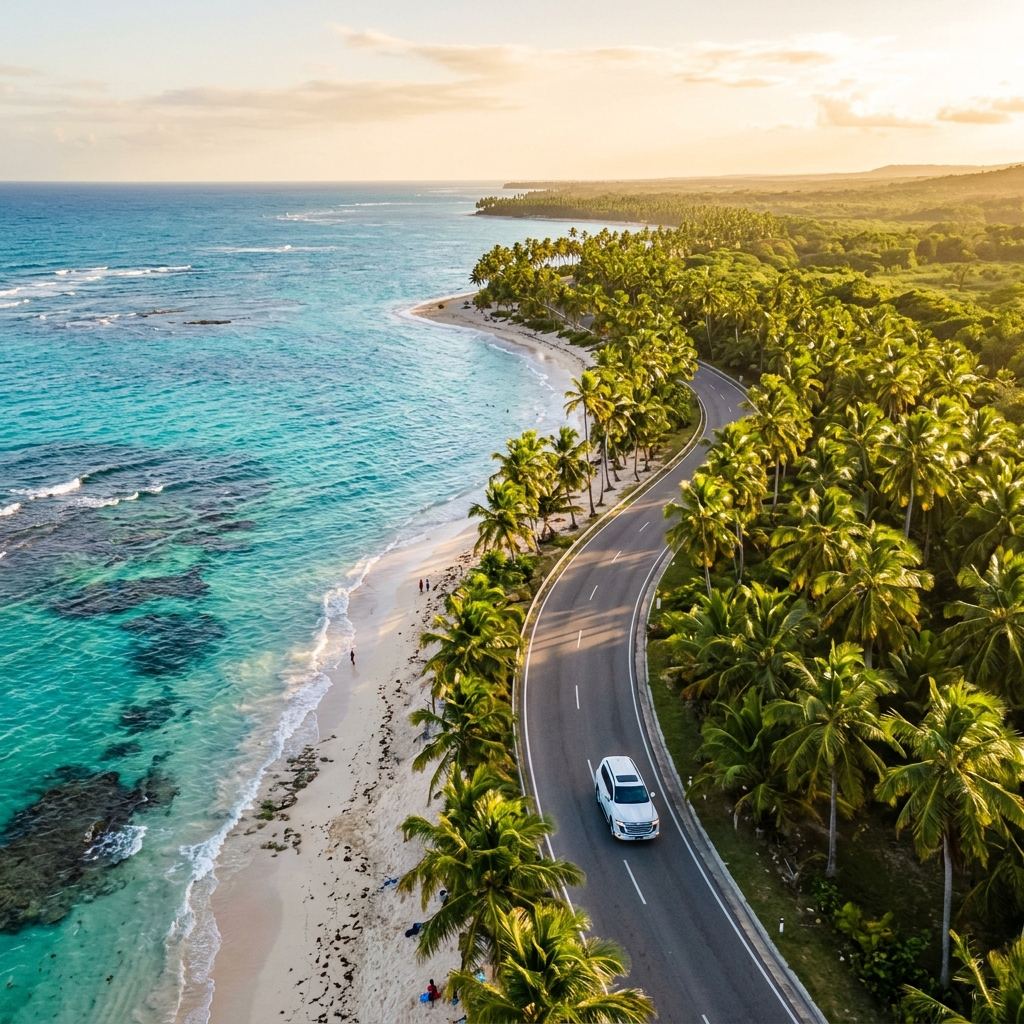
Getting around the Dominican Republic is simple once you know which option fits which trip and which region. Most all-inclusive guests barely leave the resort. The moment you want dinner in town, a beach day elsewhere or a move between regions, you need a plan, and the right plan in Punta Cana is not the right one in Pedernales.
The short version: In Punta Cana and Santo Domingo, Uber is the default for short trips. Pre-book a private driver for excursions and multi-stop days. Use Caribe Tours coaches for cheap, comfortable trips between cities. Rent a car for the south-west, Montecristi and independent exploring in Samaná or on the north coast. Avoid motoconchos where a car option exists, and do not drive at night outside the cities.
The Options, Ranked by Use Case
Uber
Use for: short trips between resorts, restaurants and neighborhoods in Punta Cana and Santo Domingo.
Cost (around, 2026): $5 to $10 for short Punta Cana trips, $15 to $25 for cross-zone trips like Bávaro to Cap Cana.
Pros: cheap, app-based, card or cash, rated drivers.
Cons: does not pick up at PUJ airport. Coverage is thinner in less developed areas and largely absent in small towns such as Las Galeras, Bayahíbe, Pedernales and Montecristi. Some drivers speak limited English.
Best for: solo travelers, couples and small groups doing short or medium trips in the two big tourist cities.
Pre-Booked Private Driver
Use for: off-resort dinners with stops, excursion days, groups of 4 to 6, airport runs, full-day exploring, and transfers between regions.
Cost (around, 2026, Punta Cana): $30 to $60 for a half day, $80 to $150 for a full day. Inter-region transfers are priced per trip; PUJ to Miches was reported at around $100 to $150 one way in 2025, and Santo Domingo airport to Samaná is a three-figure fare per vehicle.
Pros: reliable, comfortable, waits for you, flexible routes.
Cons: costs more per trip than Uber; needs booking, usually via WhatsApp or your hotel.
Best for: multi-stop days, late dinners, families, and anyone moving between regions without a car.
Registered Taxis
Use for: when Uber is not available, at attractions, and in towns where taxis are the main option.
Cost: in Punta Cana, typically 1.5 to 2 times the Uber price. Elsewhere, fares are set by negotiation or by a posted list.
Pros: available outside resorts and at hotel stands, no app needed.
Cons: pricier than Uber. Agree the fare before you get in if there is no meter.
Best for: Puerto Plata, Sosúa, Cabarete, Samaná and other places where Uber is patchy. Hotels can call drivers they trust.
Intercity Coaches (Caribe Tours and Express Buses)
Use for: moving between cities and regions cheaply.
Routes worth knowing: Caribe Tours runs from Santo Domingo to Samaná town several times a day (around 3 hours) and to Barahona (around RD$400 to RD$500 in 2026). Express air-conditioned coaches connect Santo Domingo with Las Terrenas. A bus has also run from the Sitrabapu station in Punta Cana to Miches a few times a day.
Pros: cheap, air-conditioned, comfortable seats, luggage space.
Cons: fixed schedules that change, terminals in town rather than at hotels, and you still need a taxi at each end.
Best for: budget travelers and anyone combining regions without renting a car.
Resort Shuttle
Use for: between sister resorts of the same chain where offered, and to and from the airport.
Cost: often free for guests, sometimes $5 to $15.
Pros: convenient and scheduled. Cons: limited destinations, slow if shared.
Rental Car
Use for: Airbnb stays, long trips, road trips, and regions where the beaches are spread out.
Cost (around, 2026): $35 to $70 per day for a sedan, $50 to $90 per day for a small SUV, plus insurance at about $15 to $25 per day. Toll roads such as Punta Cana to Santo Domingo were around $15 to $25 each way, and Santo Domingo to Las Terrenas around $10 to $15 each way, payable in pesos.
Pros: total flexibility.
Cons: Dominican driving takes getting used to: roundabouts with no lanes, motorbikes from every side, aggressive traffic, livestock on rural roads. Counter insurance upsells are aggressive. Parking at some attractions costs extra.
Best for: confident drivers, and close to essential in the south-west and Montecristi.
Guagua (Local Minibus)
Use for: short, cheap rides along main roads.
Cost (around, 2026): 25 to 50 pesos ($0.40 to $0.80) for a short ride in Punta Cana; longer rides cost more.
Where it works: guaguas are useful along the north coast road between Puerto Plata, Sosúa, Cabarete and Río San Juan, and around the Samaná Peninsula between Samaná town, Las Terrenas, Las Galeras and El Limón. They are less useful in Punta Cana, where Bávaro to Cap Cana is not a typical route.
Cons: crowded, Spanish only, little luggage space, and they thin out after dark.
Motoconcho (Motorbike Taxi)
Use for: as little as possible.
Cost: about $1 to $3 a ride.
Why to avoid: no protective gear, no insurance that helps tourists, drivers ignore traffic rules, and accidents are common. In Punta Cana there is always a car alternative. In small towns like Las Galeras, Las Terrenas or Cabarete they are everywhere and sometimes the only quick option; if you use one, keep it short and in daylight, agree the price, ask for a helmet and skip it with bags or after a few drinks.
Getting Around Each Region
Punta Cana and Bávaro
Uber for short hops, a private driver for excursions, resort shuttles where offered. The Bávaro beach is walkable between many resorts. Cap Cana is gated and spread out; El Cortecito is fully walkable.
La Romana and Bayahíbe
Bayahíbe village is walkable, tours pick up at hotels, and taxis and motoconchos cover the short hop to Dominicus. A car helps if you want to visit Altos de Chavón or Cueva de las Maravillas on your own.
Miches and Costa Esmeralda
Most guests stay on their resort and book tours. A rental car is worth it if you want Playa Limón, Montaña Redonda and the lagoons independently; some clearance helps on rural access roads after rain. The coast road from Punta Cana is paved but two-lane; avoid it at night.
Samaná Peninsula
No car is needed if you stay in central Las Terrenas and book tours. Guaguas connect the towns, taxis are available in each, and boats are the only practical way to Playa Frontón and the easiest way to Playa Rincón from Las Galeras. Rent a car with good clearance for Playa El Valle and Playa Morón, and avoid the mountain roads at night. See the Samaná travel guide.
Puerto Plata, Sosúa and Cabarete
Taxis are the easy option; agree the fare first. Guaguas run frequently along the coast road in the daytime. A car is worth it for Río San Juan, Playa Grande and the 27 Waterfalls on your own schedule. See the Puerto Plata travel guide.
Santo Domingo, Boca Chica and Juan Dolio
Uber works well in the capital and out to the beaches. Boca Chica is about 10 minutes from SDQ, and Juan Dolio about 40. Traffic in the city is heavy at rush hour; leave extra time. See beaches near Santo Domingo.
Barahona and Pedernales
Rent a car. Public transport beyond Barahona city is slow and unreliable, there are no rental agencies in Pedernales, and the boats, parks and viewpoints are all out of town. A regular car handles the main route in dry weather; you need a 4x4 for the Hoyo de Pelempito road, the land track to Bahía de las Águilas and the road up to the larimar mines. See the road trip guide.
Montecristi and Punta Rucia
A car is close to essential. The beaches, boat departures and Estero Hondo are spread along a rural coast. Without one, rely on tours or taxis arranged through your hotel. Coastal roads can have potholes and livestock, so drive in daylight and download offline maps. See the Montecristi guide.
Drive Times
Within Punta Cana
| Route | Distance | Drive time |
|---|---|---|
| PUJ to Cap Cana | 8 km | 10 to 15 min |
| PUJ to Punta Cana Village | 4 km | 5 min |
| PUJ to Bávaro (central) | 22 km | 25 to 35 min |
| PUJ to El Cortecito | 24 km | 30 to 40 min |
| PUJ to Uvero Alto | 35 km | 45 to 60 min |
| Bávaro to Cap Cana | 15 km | 20 to 30 min |
| Bávaro to Uvero Alto | 13 km | 20 to 30 min |
| Bávaro to Higüey | 35 km | 45 to 60 min |
Between Regions
| Route | Drive time |
|---|---|
| PUJ to Bayahíbe and Dominicus | 60 to 75 min |
| Bávaro to La Romana | 70 to 90 min |
| PUJ to Costa Esmeralda (Miches) | about 1.5 h |
| Miches town to Sabana de la Mar | about 1 h |
| Bávaro to Santo Domingo | 2.5 to 3 h |
| Santo Domingo (SDQ) to La Romana | about 1.5 h |
| SDQ to Las Terrenas | 2 to 2.5 h |
| SDQ to Samaná town | 2.5 to 3 h |
| SDQ to Las Galeras | 3 to 3.5 h |
| Santo Domingo to Barahona | 3 to 3.5 h |
| Santo Domingo to Pedernales | 5 to 6 h |
| Puerto Plata (POP) to Cabarete | 20 to 25 min |
| POP to Río San Juan | about 75 min |
| POP to Punta Rucia | about 2 h |
| POP to Montecristi | about 3 h |
| Santiago (STI) to Montecristi | about 2 h |
| Santiago to the Puerto Plata coast | about 1.5 h |
| Puerto Plata coast to Santo Domingo or Punta Cana | 3 to 5 h |
Times are approximate. Morning rush hour, Friday afternoons leaving Santo Domingo, and Sunday afternoons when families return from the beach can add 30 to 50%. Semana Santa traffic is the heaviest of the year.
Booking a Private Driver
- Ask your hotel for a recommended driver. The introduction matters for accountability.
- Use WhatsApp. It is the standard tool. Save the number of a good driver.
- Confirm price and stops in advance. For example: “Half day, El Cortecito for shopping and dinner, back by 10pm, $40.” Get a clear yes.
- Tip $5 to $15 on top for good service.
- Reuse good drivers. Repeat customers get better availability and sometimes better prices.
Online transfer services exist in every major region. Quality varies; read recent reviews.
Driving in the Dominican Republic
- Drive on the right, like the US and Canada.
- Roundabouts everywhere, with no marked lanes inside. Treat them as fluid yields.
- Motorbikes from every angle. Never assume lane discipline.
- Speed limits are loosely enforced, though radar exists on some highways.
- Toll roads link the major cities, including Punta Cana to Santo Domingo and Santo Domingo to Samaná. Carry pesos.
- GPS works. Google Maps and Waze are reliable on main roads; download offline maps for the south-west and the north-west.
- Gas stations are plentiful on main routes but sparse in rural areas; fill up before long stretches like Barahona to Pedernales.
- Do not drive at night outside the cities. Unlit roads, unlit motorbikes, livestock and potholes are the main hazards, especially on the Miches coast road, Samaná’s mountain roads and the south-west.
- Insurance is not optional. Buy full coverage at the counter.
Insurance Reality Check
Rental damage disputes are a common tourist headache. Counter insurance (around $15 to $25 per day in 2026) is worth it because:
- Rentals pick up scratches and dings quickly in local traffic
- Damage claims at return can be aggressive
- Your home credit card’s rental cover may not apply in the Dominican Republic; some cards exclude it
- The peace of mind is worth the daily cost
Common Transport Mistakes
- Trying to take Uber from PUJ. It will not work. Pre-book or use the official taxi line.
- Taking a motoconcho to save a couple of dollars when a car option exists.
- Renting a car as an all-inclusive guest with no plans to leave the resort.
- Not renting a car for the south-west or Montecristi. Public transport will not get you to the beaches.
- Driving between regions after dark.
- Not agreeing a price before getting in a non-Uber car.
- Walking long road stretches in midday heat.
- Underestimating Sunday afternoon and holiday traffic around Santo Domingo.
Quick Decision Tree
- Resort to dinner 15 minutes away in Punta Cana or Santo Domingo: Uber
- Same thing in Cabarete, Sosúa or Las Terrenas: taxi your hotel calls, or walk
- Excursion meeting point: pre-booked driver, or Uber if simple
- A day exploring several places: pre-booked driver or rental car
- Moving between regions on a budget: Caribe Tours or an express coach
- Moving between regions with a family: private transfer or rental car
- Barahona, Pedernales or Montecristi: rental car
- Airbnb for a week or more: rental car
Final Verdict
The playbook is simple: Uber for short hops in Punta Cana and the capital, taxis in smaller towns, a private driver for multi-stop days and transfers, coaches for cheap travel between cities, and a rental car for the regions where beaches are spread out. Drive in daylight, and find a good driver and keep the number.
For more logistics, see the getting there guide, the off-the-resort guide and the safety guide.
Frequently Asked Questions
Does Uber work in the Dominican Republic?
Yes in Punta Cana and Santo Domingo, where it is the easiest way to make short trips between hotels, restaurants and neighborhoods. It does not pick up at Punta Cana airport (PUJ) because of local regulations. In smaller places such as Las Galeras, Bayahíbe, Pedernales and Montecristi, coverage is thin or absent, so use taxis your hotel arranges.
How much does it cost to get around Punta Cana?
Prices in 2026 were around $5 to $10 for an Uber between Bávaro hotels and El Cortecito, and around $15 to $25 from Bávaro to Cap Cana. Registered taxis cost roughly double. A private driver was around $30 to $60 for half a day and $80 to $150 for a full day, and rental cars around $35 to $70 per day.
Can I travel between regions by bus?
Yes. Caribe Tours runs comfortable air-conditioned coaches from Santo Domingo to Samaná and to Barahona, among other routes, and express coaches connect Santo Domingo with Las Terrenas. Fares are low; the Barahona route was around RD$400 to RD$500 in 2026. Local guaguas (minibuses) run along the north coast and around the Samaná Peninsula. Check schedules the day before.
Should I rent a car in the Dominican Republic?
It depends on the region. All-inclusive guests in Punta Cana, Bayahíbe or Miches rarely need one. For Barahona and Pedernales, Montecristi, and exploring Samaná's or the north coast's beaches on your own schedule, a car is close to essential. Drive defensively, avoid driving at night, and buy full insurance at the counter.
Are motoconchos (motorbike taxis) safe?
They are the riskiest way to get around, and they cause serious injuries to tourists every year. In Punta Cana there is always a car-based option, so skip them. In small towns like Las Galeras, Las Terrenas or Cabarete they are the main short-hop transport; if you do use one, keep it to short daytime trips, agree the price first, ask for a helmet and never ride with luggage.
How long does it take to drive between beach regions?
Approximate times: Punta Cana to Bayahíbe about 1 to 1.25 hours, Punta Cana to Miches about 1.5 hours, Punta Cana to Santo Domingo 2.5 to 3 hours, Santo Domingo to Las Terrenas 2 to 2.5 hours, Santo Domingo to Barahona 3 to 3.5 hours, Santo Domingo to Pedernales 5 to 6 hours, and Puerto Plata airport to Montecristi about 3 hours. Add time on Friday and Sunday afternoons and holiday weekends.
How do I get a private driver?
Ask your hotel concierge or front desk; they keep lists of trusted operators. In Punta Cana in 2026, expect around $30 to $60 for a half day and $80 to $150 for a full day. Confirm the price and stops before you get in. WhatsApp is the standard way to book; once you find a good driver, save the number.
Can I walk between resorts?
In some places. The Bávaro beachfront connects many resorts along the sand, El Cortecito is walkable, and Bayahíbe village, central Las Terrenas, Cabarete and Sosúa are compact. Cap Cana is gated and spread out, and the big Miches resorts sit on their own stretches of coast. Walking along roads is uncomfortable because of heat, traffic and few sidewalks.