Dominican Food Guide (2026): What to Eat and Where, Region by Region
What to order at the colmado, the comedor and beyond the resort buffet, plus the regional specialties from Samaná coconut fish to Montecristi goat
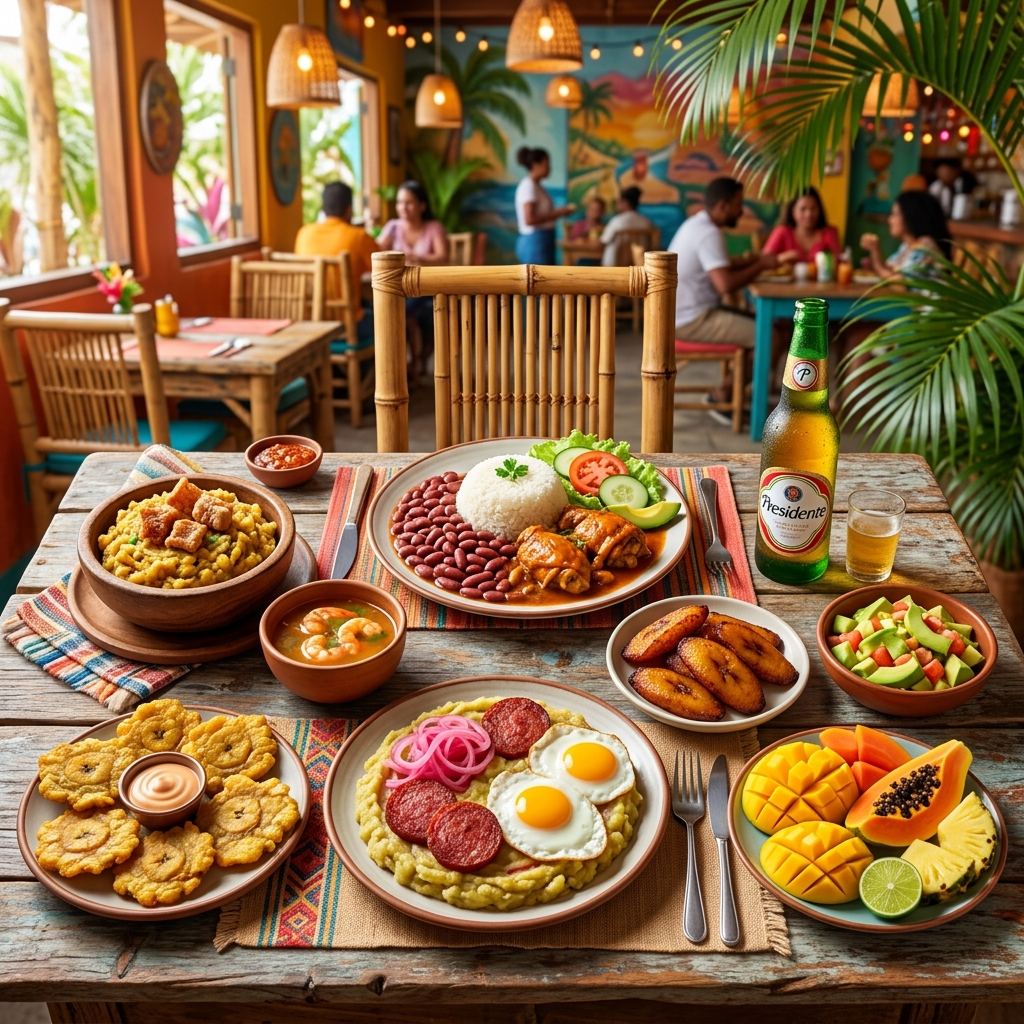
The food at most Dominican all-inclusive resorts is competent and varied, but it is mostly international resort food: Italian, Asian fusion, American grill, the steakhouse, the seafood night. Dominican cooking is rarely the showcase. Travelers who only eat at the resort can leave Punta Cana, Bayahíbe or Playa Dorada without tasting the country.
That is a missed opportunity. Dominican food is hearty, shaped by Spanish, African and Taíno traditions, and it changes as you move around the island: coconut-sauced fish in Samaná, goat stew in Montecristi, whole fried fish on every beach. Here is what to eat, where to find it, and how to eat like you noticed which country you were in.
The short version: Try la bandera (rice, beans, stewed meat) at a local comedor. Order mofongo at least once. Drink Presidente beer, Brugal rum, and morir soñando at breakfast. Eat whole fried fish on the beach wherever you are. Then try the regional specialty: pescado con coco in Samaná, chivo (goat) in Montecristi, seafood locrio in Barahona. In Punta Cana, a half-day trip to Higüey gets you comedor lunches at local prices.
The Foundational Dishes
A short list of dishes that define Dominican cuisine. These are the things you should taste at least once during your trip.
| Dish | What it is | Where to find it |
|---|---|---|
| La bandera dominicana | White rice, red beans, stewed meat | Any comedor; resort lunch buffets sometimes |
| Mofongo | Mashed green plantains with garlic and chicharrón | Off-resort restaurants; mid-range Dominican spots |
| Mangú | Mashed boiled green plantains, breakfast version | Breakfast spots, comedores; resort buffets |
| Tres golpes | Mangú with salami, cheese, eggs | Breakfast spots, comedores |
| Sancocho | Heavy meat-and-vegetable stew | Sit-down restaurants; weekend specials |
| Pescado frito | Whole fried fish | Beachfront restaurants like Captain Cook |
| Tostones | Twice-fried green plantains | Side dish almost everywhere |
| Maduros | Sweet fried ripe plantains | Side dish almost everywhere |
| Chicharrón | Pork crackling | Snack and ingredient |
| Pollo guisado | Stewed chicken in tomato sauce | Comedores and resort buffets |
| Asopao | Soupy rice with chicken or seafood | Comfort-food spots |
| Empanadas | Stuffed fried pastries | Bakeries and breakfast spots |
La Bandera in detail
The unofficial national dish. White rice, red beans (habichuelas guisadas, which are stewed with onion, garlic, peppers, and tomato), and stewed meat (chicken pollo guisado is most common; beef carne guisada is also standard). Often served with tostones, a small salad, and avocado.
This is the meal Dominicans eat at home most days. Comedores serve it as the workday lunch plate; on weekends, families make it for a long Sunday lunch. In 2026 the lunch-counter version was around $5 to $10. Resort buffet versions exist but rarely capture the home-style depth.
Mofongo
Mashed green plantains with garlic, salt, oil, and chicharrón (pork crackling) pounded together in a wooden mortar. Sometimes filled or topped with shrimp, chicken, or stewed beef. Originally an African dish brought to the Caribbean, made famous in Puerto Rico but also a staple here.
Mofongo at a real Dominican restaurant is much better than the resort buffet version. Try it anywhere the kitchen makes it to order: a sit-down restaurant in Punta Cana Village or Higüey, El Concón in Juan Dolio, or Rancho Típico at La Cueva near Pedernales.
Mangú and Tres Golpes
Mangú is mashed boiled green plantains, typically served at breakfast with sautéed red onions on top. Add fried Dominican salami, fried cheese (queso de freír), and fried eggs and you have “los tres golpes” (the three hits), the classic Dominican breakfast.
This is the breakfast worth seeking out off-resort. Resort buffets sometimes offer mangú but rarely the proper tres golpes spread. A real Dominican breakfast counter does it better.
Sancocho
A heavy meat-and-vegetable stew with multiple meats (chicken, beef, pork, sometimes goat or sausage), root vegetables (yuca, ñame, plantain, pumpkin), and corn on the cob. Served with white rice and avocado. Considered the hearty weekend meal; many restaurants only offer it on Sundays.
If you see sancocho on a menu, especially at a sit-down restaurant on a Sunday, order it. It’s the comfort food of the country.
Pescado Frito
Whole fried fish (typically mero, mahi, snapper, or whatever came in that morning), served with rice, beans, and tostones. The casual seafood standard, available on almost every Dominican beach.
Captain Cook does this well in El Cortecito. Smaller local spots often do it even better at lower prices. Fish is usually sold by weight, so agree the price before it is cooked.
Drinks Worth Knowing
| Drink | What it is |
|---|---|
| Presidente | The Dominican beer; light, cold, everywhere; around $3-$5 at colmados and $8-$12 at resort bars in 2026 |
| Mamajuana | Spiced rum infusion (rum, red wine, honey, bark, herbs, roots) |
| Brugal Añejo / 1888 | The major Dominican rum brand; añejo is standard, 1888 is premium aged |
| Barceló Imperial | Premium Dominican rum, slightly smoother than Brugal at equivalent tiers |
| Cuba Libre | Rum and Coke with lime; the local cocktail default |
| Morir Soñando | “To die dreaming”; orange juice with milk and sugar; classic breakfast drink |
| Cerveza Bohemia | Lighter Dominican beer; alternative to Presidente |
| Café | Strong Dominican coffee; usually espresso-style; sometimes with sugar already added |
| Batidas | Fresh fruit smoothies blended with milk or water |
| Coconut water | Fresh from the husk at beach kiosks; around $2-$3 in 2026 |
Mamajuana specifically
Mamajuana deserves its own paragraph because it’s a Dominican specialty most travelers don’t understand. The bottle starts dry: rum, red wine, and honey poured over a mixture of tree bark, herbs, and roots that have been pre-soaked. The first pour is intense and herbal; subsequent pours mellow as the alcohol extracts more flavor.
Traditionally consumed for vitality (it has historical claims about romance and energy that are not particularly evidence-based), but more practically it’s a digestif served after meals. Bottles ranged from cheap tourist versions (around $5-$10) to boutique versions (around $20-$50 or more) in 2026.
For souvenirs, buy mamajuana at a regular liquor store or supermarket (Sirena, Supermercado Nacional) rather than a resort gift shop. Prices are 50 to 70% lower for the same products.
Brugal vs Barceló
The two major Dominican rum producers run multiple tiers:
| Brand | Standard | Premium Aged | Notes |
|---|---|---|---|
| Brugal | Brugal Añejo | Brugal 1888 | The mainstream choice; widely exported |
| Barceló | Barceló Imperial | Barceló Imperial Premium Blend | Slightly smoother profile at equivalent tiers |
| Ron Atlántico | Ron Atlántico Reserva | Ron Atlántico Gran Reserva | Smaller boutique producer; well regarded |
For sipping, the premium aged versions (Brugal 1888, Barceló Imperial Premium, Ron Atlántico Gran Reserva) are worth the upgrade. For mixing, the standard añejo versions are perfectly fine and cheaper.
Regional Food Around the Country
Dominican staples are the same everywhere, but each beach region has its own strengths.
Samaná Peninsula: coconut and a French-Italian twist
Samaná is the place to try fish and seafood cooked in coconut sauce, often called pescado con coco, a peninsula classic shaped by its coconut groves. El Lugar in Las Terrenas is one place diners mention for coconut-sauce dishes. Las Terrenas also has a large French and Italian community and the best restaurant scene on the peninsula, including La Terrasse in the Pueblo de los Pescadores. In Las Galeras, cliff-top El Cabito is known for its sunset view; call ahead for lobster or paella. See the Samaná travel guide.
Montecristi and Punta Rucia: goat and fish from the boats
Montecristi is famous for chivo (goat), usually stewed, and the Malecón restaurants serve fish straight from the boats. Blue Marlin is one of the few places in town that aims a little higher, with lambí (conch) and crab a la criolla among the dishes diners mention. In Punta Rucia and La Ensenada, fried fish with tostones is the standard lunch. Agree on prices for lobster and whole fish before ordering. See the Montecristi guide.
Barahona and Pedernales: Creole seafood
On Barahona’s malecón, Brisas del Caribe serves pescado a la criolla (fish in a tomato, pepper and onion sauce), fish with coconut rice and seafood locrio. At La Cueva, where the boats leave for Bahía de las Águilas, Rancho Típico does whole fried or grilled fish and mofongo; mofongo was around $7 to $13 in recent guides. Most places are cash only.
Santo Domingo, Boca Chica and Juan Dolio: fried fish and capital dining
At Boca Chica, the fish stalls on the public beach cost a fraction of the sit-down places; fish is sold by weight, so confirm the price first. For a sit-down seafood meal, Neptuno’s Club and Boca Marina are popular and expensive by local standards. In Juan Dolio, El Concón is named for the crunchy rice at the bottom of the pot and serves chivo guisado, sancocho and asopao. The capital itself has the country’s deepest restaurant scene.
La Romana and Bayahíbe: village seafood and marina dining
In Bayahíbe village, Restaurante Típico La Bahía serves fish and seafood from the boats with rice, tostones and beans; ask what came in that day. For a dressier night, La Casita at the Casa de Campo marina does Spanish-style seafood, and La Piazzetta at Altos de Chavón is Italian fine dining.
Puerto Plata, Sosúa and Cabarete: beach seafood and comedores
In Cabarete, La Casita de Papi is known for shrimp in garlic-butter sauce with your feet in the sand. In Sosúa, Waterfront Playa Alicia is a sunset spot; for Dominican food at local prices, look for a comedor in Los Charamicos. In Puerto Plata city, Tío Pan is a moderately priced café and Dominican spot.
Miches
Most visitors eat at the resorts. Outside them, fried fish and la bandera at simple roadside comedores are the norm.
Where to Eat for Real Dominican Food in Punta Cana
The map of authentic Dominican food in the Punta Cana area, ordered by accessibility.
Tier 1: Inside the resort
Most resort buffets include some Dominican dishes (la bandera, mangú, fried plantains, sancocho on Sundays at some properties). Quality is competent but not outstanding. Try them as introductions but don’t judge Dominican food by the resort version.
Tier 2: Off-resort but easy
Captain Cook in El Cortecito is the classic accessible off-resort option. Casual beachfront, fresh fish prepared simply, traditional Dominican sides (rice, beans, tostones). Not pretending to be fancy, doesn’t need to be.
Smaller local spots in El Cortecito also serve Dominican food at local prices. Walk a couple of blocks back from the beach; the prices drop and the food gets more local.
Tier 3: Punta Cana Village
The residential neighborhood near the airport has actual neighborhood restaurants serving locals as well as tourists. Soles is a popular sit-down spot. Several smaller comedores and casual restaurants exist within walking distance of the village’s residential streets. Prices are meaningfully lower than the resort strip.
Tier 4: Higüey
The nearest real Dominican town, 45 minutes inland from the resort area. Higüey has proper comedores serving la bandera (around $5 to $10 in 2026), mofongo (around $8 to $15) and the full local menu without tourist pricing.
For the full Dominican lunch experience, hire a driver for a half day, drive to Higüey, eat at a comedor (ask the driver where locals eat), browse the central market, see the Basilica of Higüey (a major Catholic pilgrimage site), and return. A driver for the trip was around $80 to $150 in 2026, plus the meal.
This is the most authentic Dominican food experience available within easy distance of Punta Cana.
Tier 5: Santo Domingo
The capital has the country’s deepest restaurant scene, from modern Dominican restaurants to traditional comedores. From Punta Cana it is a 2.5 to 3 hour drive each way, so it works best as an overnight on a longer trip. See beaches near Santo Domingo.
What to Order at the Colmado
The colmado is the Dominican corner store, a fixture of every neighborhood, selling beer, rum, snacks, basic groceries, and sometimes cooked food. Many colmados are also informal social spaces where neighbors gather in the evening.
For travelers, the colmado is where you buy:
- A cold Presidente, typically a fraction of the resort bar price
- A bottle of water, around $1 in 2026
- A bag of plantain chips or a local snack, around $1 to $2
- A bottle of Brugal or Barceló at supermarket pricing
- A small mamajuana as a souvenir, around $5 to $10
Practical:
- Most colmados accept cash only (USD or pesos, both work)
- They’re typically open from early morning until 10 to 11 PM
- Colmados are neighborhood social hubs; saying “buenas” when you walk in is appreciated
- Some colmados serve simple cooked food (chicharrón, fried fish) at lunch
Street Food Worth Trying
Dominican street food is generally safe and often excellent. Practical picks:
| Item | What it is |
|---|---|
| Chimichurris | Dominican burgers/sandwiches with cabbage, sauce, and seasoned meat |
| Pinchos | Skewered grilled meat with vegetables |
| Empanadas | Fried stuffed pastries (cheese, meat, chicken) |
| Fritos | Various fried snacks at small stalls |
| Coco | Fresh coconut water served from the husk |
| Yaroa | Layered fries with chicken/beef and cheese; gluttonous comfort |
| Helados / paletas | Local ice cream and popsicles, often fruit-based |
Where to find good street food: in Higüey’s central market and surrounding streets, at stalls in El Cortecito, around the plazas in the evening, on the Boca Chica beachfront and along Barahona’s malecón.
Safety: street food is generally fine if it’s hot, busy, and freshly cooked. Stale or sitting-out food is the issue, not the venue type. The same holds at any food destination: turnover beats venue type for safety.
Restaurant Recommendations Beyond Resort Walls
For a fuller dining experience in Punta Cana that mixes Dominican food with the standard tourist options:
| Restaurant | Style | Why it matters |
|---|---|---|
| Captain Cook | Casual beachfront seafood | Fresh fish prepared traditionally |
| Jellyfish | Beachfront fine dining | Some Dominican-influenced dishes alongside Mediterranean |
| La Yola | Marina fine dining | Mediterranean with Dominican seafood |
| Passion by Martín Berasategui | Tasting menu | Local Dominican ingredients in modern Spanish technique |
For pure local Dominican food, the Higüey trip or Punta Cana Village neighborhood spots are better than any of these.
Common Food Mistakes Tourists Make
A few things that consistently waste opportunity:
- Eating only at the resort. You missed the point of going to the Dominican Republic.
- Skipping breakfast off-resort. Mangú and tres golpes at a Dominican breakfast counter is one of the easiest cultural experiences available.
- Drinking only resort cocktails. The local rum is good. Try the premium aged versions.
- Avoiding street food entirely. Most Dominican street food is safe and excellent if you pick busy stalls.
- Buying mamajuana at the airport gift shop. Pay 3x what supermarkets charge for inferior product.
- Not learning a few Spanish food words. “Lo más típico, por favor” (the most typical, please) at any restaurant gets you the local recommendation.
- Drinking tap water. Bottled or filtered only. Always.
- Skipping the regional specialty. Leaving Samaná without coconut fish or Montecristi without chivo misses the best meal of the region.
- Not asking the price of fish or lobster first. It is usually sold by weight.
Final Verdict
Dominican food deserves to be part of any trip, wherever you stay. The all-inclusive format makes it easy to never taste the country, but a single off-resort lunch or breakfast changes that. La bandera at a Higüey comedor, mangú with tres golpes at breakfast, fried fish on the sand at Boca Chica, coconut fish in Las Terrenas, goat stew in Montecristi, a cold Presidente at a colmado: these are the meals travelers remember.
For complementary planning, see the off-the-resort guide for off-property exploration logistics, the money and tipping guide for pesos and cash strategy, and the first-timer’s guide for general orientation.
Frequently Asked Questions
What is the national dish of the Dominican Republic?
La bandera dominicana ('the Dominican flag') is the unofficial national dish: white rice, red beans (habichuelas guisadas), and stewed meat (typically chicken or beef), often served with fried plantains (tostones) and a small salad. It's the standard lunch plate at Dominican comedores and the meal Dominicans eat most often at home. Resort buffets sometimes offer it, but the version at a real comedor is much better.
What should I order on my first trip for authentic Dominican food?
Start with la bandera (the standard rice-beans-meat plate). Try mofongo (mashed green plantains with garlic and pork crackling) at least once. Order pescado frito (whole fried fish) at a beachfront spot such as Captain Cook in Punta Cana or the fish stalls at Boca Chica. Drink a Presidente beer with whatever you're eating. Don't skip the morir soñando (orange juice with milk and sugar) for breakfast.
What is mangú and where can I get it?
Mangú is mashed boiled green plantains, typically served at breakfast with sautéed red onions on top. Add fried Dominican salami, fried cheese, and fried eggs and you have 'los tres golpes' (the three hits), the classic Dominican breakfast. Most resorts serve a version at the buffet; the better versions are at off-resort comedores and local breakfast spots, such as those in Punta Cana Village or Higüey. Worth seeking out.
What regional dishes should I look for around the Dominican Republic?
On the Samaná Peninsula, look for fish and seafood cooked in coconut sauce (pescado con coco). In Montecristi, the specialty is goat (chivo), usually stewed. Along the coasts, whole fried fish with tostones is the standard beach lunch, from Boca Chica to Bayahíbe, Punta Rucia and La Cueva near Bahía de las Águilas. Barahona's seafront restaurants serve fish with coconut rice and seafood locrio, a Dominican rice dish.
Can I drink the tap water in the Dominican Republic?
No. Stick to bottled or filtered water for drinking and brushing teeth. Tap water in the Dominican Republic is not reliably safe even at resorts. Resort ice is made with filtered water and is fine. Most resorts provide bottled water in rooms; if not, a 1.5L bottle was around $2 at a colmado or hotel shop in 2026. For full money and water context see our money and tipping guide.
What is mamajuana and is it safe to drink?
Mamajuana is a Dominican spiced rum infusion: rum, red wine, and honey poured over a bottle of bark, herbs, and tree roots. The first pour can be intense; subsequent pours mellow as the alcohol extracts more flavor. It's traditional, widely available, generally safe at established restaurants and bars. Avoid extremely cheap mamajuana from beach vendors. Bottles to take home were around $5 to $20 in markets and $30 or more at resort gift shops in 2026.
Where can I try real Dominican food off-resort in Punta Cana?
El Cortecito has the most accessible casual Dominican food, especially at Captain Cook for fresh fish and at small local comedores tucked off the main strip. Higüey (45 minutes inland) is the nearest real Dominican town with proper comedores serving la bandera and the full local menu at non-tourist prices. Punta Cana Village has a few neighborhood spots away from the resort strip. Hire a driver and ask them where locals eat.
What is the best Dominican rum?
Brugal is the most popular and exported Dominican rum brand, with multiple aged variants from Brugal Añejo (the standard) to Brugal 1888 (a premium aged rum worth seeking out). Barceló (especially Barceló Imperial) is widely respected and slightly smoother than Brugal at equivalent tiers. Ron Atlántico is a smaller premium producer known for its aged rums. Avoid the cheap unbranded resort rums when you can; the Brugal/Barceló premium tiers are worth the upgrade.